The Rite of the New Era

The Portuguese Rite
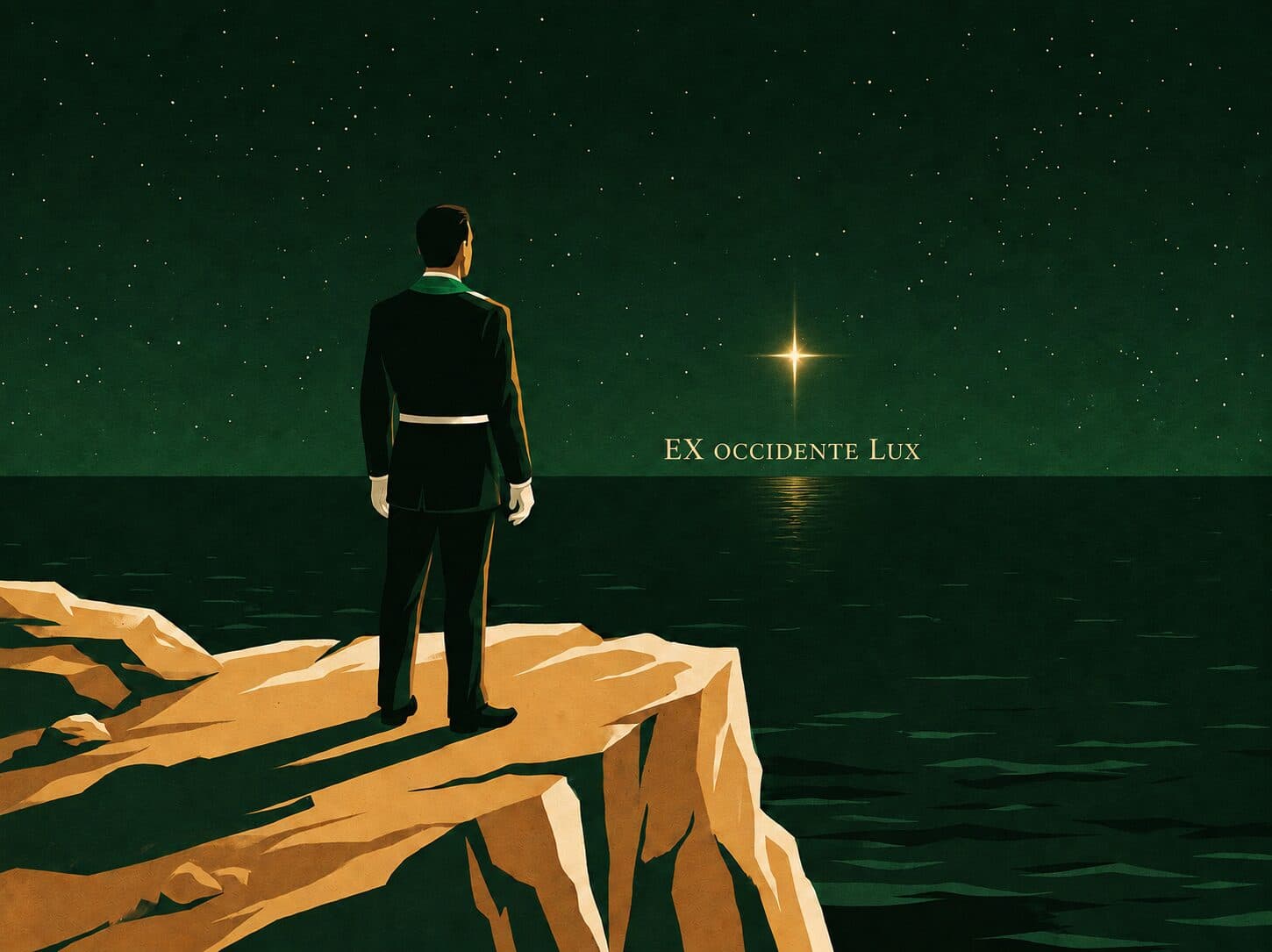
Consecrated in 2014, it holds within itself the singularity of the Portuguese spirit and its spiritual dimension — a gift of incalculable value to Universal Freemasonry.
The Portuguese Rite contains within itself all the anthropological, historical, mythical and ritual foundations of the complex ecumenical Portuguese imagination. It is a Universalist Rite, gathering everything unitary in the human being, transcending any relativism.
It advocates an awakening of consciousness through progression across the several Masonic degrees, anchored in the mythemes of Portuguese history — Universal, but in our case also eschatological and salvific.
Frequently asked questions
Everything about the Portuguese Rite
The Portuguese Rite was born for this new era. It holds within itself the capacity to express, concisely and meaningfully, the singularity of the Portuguese spirit, reflecting its spiritual dimension and its part in unveiling a more harmonious sense of globalisation — a process which, in its present form, has proved unbalanced. This rite is thus a gift of incalculable value to Universal Freemasonry.
It advocates an awakening of consciousness through progression across the several Masonic degrees of the Rite, anchored in the mythemes of Portuguese history which, as with the myths of other Rites, is Universal but in our case also eschatological and salvific.
The Portuguese Rite is concerned more with the enigmatic verticality of cosmic Man than with the popular horizontality of the human part. The imperative need for self-knowledge is the foundation of self-realisation, or self-redemption.
The Portuguese Rite contains within itself all the anthropological, historical, mythical and ritual foundations of the complex ecumenical Portuguese imagination. It is a Universalist Rite, a Rite that gathers everything unitary in the human being, transcending any relativism. The Portuguese Rite has a wide heuristic and hermeneutic potential, articulating the long cultural process (mythological and archetypal) of our deep imagination with an immense aesthetic, scenic and theatrical richness.
The Portuguese Rite was consecrated in the Grande Loja Legal de Portugal/GLRP by decree of the then Grand Master José Moreno, on the second day of the fifth month of the year 6014.
The PORTUGUESE RITE is the official Rite of the SOVEREIGN GRAND LODGE OF PORTUGAL glsp.pt/.
The petitioners who signed the document underpinning the Portuguese Rite requested the consecration of 3 Lodges (which took place in May and June 2014) within the GLLP/GLRP: R∴L∴ PORTUGALIS, at the Orient of Lisbon; R∴L∴ NINY SEQUEIRA, at the Orient of Portalegre; and R∴L∴ MARECHAL TEIXEIRA REBELO, consecrated at the Orient of Lisbon on 10 June 2014.
It was this last Lodge that took on the task of profoundly revising the Rite's initial document and established it as we understand it today. The first document concerning the Portuguese Rite proved excessively reductive in its treatment of the anthropological, historical, mythical and ritual foundations that sustain the vast and complex ecumenical Portuguese imagination. Recognising the need to honour the depth and richness of those matrices, it was updated to take in a broader vision, faithful to the plural and ancestral essence that inspires it.
The changes were profound and involved altering several designations of Lodge Officers, the creation of new Regalia, an Acclamation, the Arrangement of the Lodge, the Chain of Union, the Decoration of the Temple, the Colour of the Candles, the Column of Harmony, Close Order, changes to the Ceremony of Initiation and an entirely new Ceremony of Passing to Fellow Craft, Instruction Groups, and so on.
At the request of João Pestana Dias, the 1st Worshipful Master and founder of R∴L∴ Marechal Teixeira Rebelo (originally No. 107), two further Brethren joined the project: Fernando Casqueira and Luís de Matos. The three devoted more than 12 years to the study, research and refinement of the Rituals of the 3 symbolic degrees and of the founding premises of the Portuguese Rite. They worked from the original version they had drafted in June 2014, which was revised and tested in R∴L∴ Marechal Teixeira Rebelo No. 107; the final work is the product of the Egregore of that Worshipful Lodge, led by Brother João Pestana Dias.
This Ritual is a fundamental instrument of the work in Lodge, through which Symbolic Freemasonry is expressed in all its essence, with full rigour and imbued with the real Utopia of the ecumenical Portuguese imagination. Every effort was made to avoid mistakes, but they are Masons in search of the Light, seeking individual improvement, which is why it is impossible to produce a perfect work. The true Temple will always be unfinished, like the beautiful Unfinished Chapels of Batalha.
In the Ritual of the Portuguese Rite nothing will be found contrary to the spirit or to the ritual thought practised by the founders of Regular Freemasonry. Despite the care taken by the Brethren who devoted themselves to this work, it is likely (and perhaps inevitable) that errors and misprints remain, for which we ask your understanding.
The Portuguese Rite comprises 12 degrees. The first 3, the symbolic degrees (Entered Apprentice, Fellow Craft and Master Mason), are under the jurisdiction of the SOVEREIGN GRAND LODGE OF PORTUGAL, and the remaining 9 degrees are the responsibility of the SUPREME COUNCIL OF THE HIGH DEGREES OF THE PORTUGUESE RITE, which governs the Philosophical/Spiritual Degrees of the Portuguese Rite.
Since 2014, João Pestana Dias has taken on the task of making the Portuguese Rite known, giving lectures in Türkiye (see photo), Brazil, France, Italy, Bulgaria, Andorra, Spain, Romania, Greece, Malta and, most recently, Germany. Universal in its essence, the Portuguese Rite is already worked outside Portugal, notably in Brazil and in the Philippines, and the granting of new Charters is under consideration, in particular to a Grand Lodge in Russia.
At the SOVEREIGN we do not want you to be an “eternal Apprentice” but a “Master forever learning”, because on the journey of wisdom only the constant search for knowledge allows spiritual evolution and the consequent expansion of consciousness.
For those unfamiliar with the Portuguese Rite, allow me an analogy with one of the oldest Rites worked in Freemasonry, the Rectified Scottish Rite, or Rectified Scottish Regime, commonly known as the RER.
Just as, for example, the RER aspires to the Reintegration of Beings — one of the fundamental pillars of the esoteric thought of Martinez de Pasqually, with a strong influence on the tradition of Christian occultism — which holds that the spiritual mission of the human being is to return to its original state of purity and union with the Divine (reintegration into Unity).
The Portuguese Rite draws on a spiritual movement begun some 900 years ago, in which arose the conceptualisation of the Fifth Empire — the Empire of the Holy Spirit, also known as the 5th Empire — which is nothing other than Universal Fraternity, an eschatological and salvific Resurrection or Redemption of the Human Being, a process of identity of the Lusitanian soul.
Integration of the Portuguese mythic imagination
- The Portuguese Rite makes use of national founding myths, such as the Fifth Empire, the Miracle of Ourique and Templar mysticism, as initiatic metaphors.
- These myths are not merely ornamental: they are treated as symbolic keys for the inner building of the Initiate.
Ecumenical and universalist emphasis
- Although deeply rooted in the Portuguese context, the rite seeks to open itself to dialogue with a range of spiritual and cultural traditions, reflecting the ecumenical character that marked the Portuguese maritime expansion.
- This approach widens the symbolic and philosophical spectrum, going beyond strictly European or Christian readings.
An adapted ritual structure
- It keeps degrees equivalent to those of the more widespread rites (such as the Ancient and Accepted Scottish Rite or the French Rite), but adjusts the language, the symbolism and the ritual dramaturgy so as to reflect the Portuguese ethos in a way that is not merely national but universal.
- Some ceremonies (especially in the degree of Fellow Craft) have adaptations that strengthen the link to the ecumenical imagination, to the language and to the cultural heritage.
Ritual language and aesthetics
- The liturgy of the rite is more poetic and evocative, seeking to resonate with Portuguese lyrical sensibility.
- Maritime symbolism, the notion of voyage and discovery, and the dimension of collective destiny recur throughout.
Consecrated in 2014, the Portuguese Rite was born for this new Era. While keeping the essence of Freemasonry, it renews it with the spiritual mission of the Lusitanian soul.
The purpose of the High Degrees of the Portuguese Rite is, after the manner of Fernando Pessoa's vision of the Fifth Empire, universal in nature, and the ultimate end of the path of the Portuguese Rite is the Expansion of Consciousness.
As the poet wrote in his celebrated poem on the Fifth Empire, “all will be needed: ALL, ALL, ALL.”
The Portuguese Rite is the reflection of Portuguese Universalist Humanism. It advocates an awakening of consciousness through inner evolution, founded on Spiritual Freedom, on Science and on Wisdom.
The imperative of the Portuguese Rite
The symbolic complex of our myth-history, of decisive importance in the building of the identity process of the Lusitanian soul, presents itself as a field that can no longer be postponed, calling for the deepening and diffusion that our organisations must undertake.
By virtue also of the ecumenical value inherent in that complex, there arose the need to give effect to the Portuguese Rite, capable of expressing in condensed form the specificity of the Portuguese being, its spirituality, and its contribution to a possible harmonisation of a process of globalisation that has been proving iniquitous and ill-suited. This, moreover, has been treated by countless authors from António Telmo, Cunha Leão, Dalila Pereira da Costa, Agostinho da Silva, Camões, Pessoa, Teixeira de Pascoaes and a great many more, in whose works we find the conceptualisations of the Fifth Empire and the Empire of the Holy Spirit, the Voyage, Saudade, the Mare Tenebrum and the Finisterrae, the Resurrection and the eschatological or salvific Redemption. The Portuguese Rite, while not constituting a break with an exogenous tradition, holds it possible to integrate into the context of a Portuguese Freemasonry its socio-historical and mythical references, in the assumption of an inestimable contribution to Universal Freemasonry.
You may visit one of the largest and oldest Masonic libraries in the world, the House of the Temple (Washington, D.C., USA), which holds copies of the magazine ORIGEM of the Sovereign Grand Lodge of Portugal and a copy of the Entered Apprentice Ritual of the PORTUGUESE RITE.
In Brazil, you may visit Aurora Lusitana Lodge No. 53, consecrated on 20/3/2025 at the Orient of São Paulo, under the jurisdiction of the GOISP — goisp.org.br
In the Philippines, you may visit the District Grand Lodge of the Far East, Philippine Islands — www.facebook.com/DGLFE
Portugal, in its deepest soul, does not see itself merely as a country — but as mystery, mission and living prophecy. In that sense the High Degrees of the Portuguese Rite seek to be a bridge between East and West, science and faith, matter and spirit. A profound synthesis of spirituality, philosophy, science and universal culture. To that end we propose an interdisciplinary and transdisciplinary approach — where knowledge is fused rather than divided.
The relation between the Portuguese Rite and the culture and history of Portugal is expressed in a metaphysical dimension, far from merely rational or positivist approaches. It is a symbolic, mythical and spiritual bond, in which certain historical episodes — such as the Miracle of Ourique, the founding myth of the Nation — transcend chronology and become living archetypes. These symbols remind us that Portugal is not merely a territory or a people, but an idea with a mission to fulfil, inscribed in its own essence and projected beyond time.
The Portuguese Rite is the Rite of the New Era. It therefore adapts to the modern world without ever losing its essence, because the timeless truths it holds do not belong to time — they are permanent, universal and unchanging. The way those truths are transmitted and communicated must, however, keep pace with the world we live in, so that they can be understood and fully lived. The Rite thus remains faithful to its root while speaking the language of the present, ensuring that the Light it carries goes on illuminating consciences in its own time and place.
The Portuguese Rite is a path of Expansion of Consciousness towards the 5th Empire, the Empire of the Holy Spirit and of Universal Fraternity; it is therefore an essentially Spiritual path with a strong link to science.
Spirituality today is not confined to retreats or solitary reflection. It must be undertaken collectively, in Egregore, forming a Spiritual Monad, a Universal Fraternity that gathers “all the scattered embers of a fire, to kindle the Fire of Love”.
The Portuguese Rite seeks an Awakening inwards. As Pierre Teilhard de Chardin said:
“Religion is not one, there are hundreds of them. Spirituality is only one. Religions are ‘tollgates’ to Spirituality. Religion is a cause of division. Spirituality is a cause of Union. Religion seeks you out so that you believe. Spirituality you must seek out yourself. Religion follows the precepts of a sacred book. Spirituality seeks the sacred in every book. Religion dreams of glory and of paradise. Spirituality makes us live glory and paradise here and now.”
We are in a phase of change and of differentiation of energy, in which Evil is more Evil and Good more Good, because it is on the darkest nights that the stars shine brightest. To be Spiritual in the 21st century is to bring Spirituality into Materiality. It is to be a Man of Action.
In a world of rapid transformation, where the most fundamental principles that have always governed us are disappearing, the present relevance of a more advanced system within the Portuguese Rite is plain. Divine mysticism will act in the form of human ethics. That is why self-knowledge is the root of all self-realisation. Where the vertical root is missing, the horizontal branches cannot spread. Ethical action is an inevitable consequence of mystical being. Action must be the outflow of being! Ethical living must be the spontaneous fruit of mystical consciousness!
Responsibility for the 3 symbolic degrees of the Portuguese Rite — Entered Apprentice, Fellow Craft and Master Mason — lies with the Sovereign Grand Lodge of Portugal, while the High Degrees (8+1) are the responsibility of the Supreme Council of the High Degrees of the Portuguese Rite. The Portuguese Rite is thus made up of 12 degrees (11 degrees + 1 Invisible).
Any Regular Freemason.
Yes. In Freemasonry, Rite and Obedience are distinct though related concepts.
Rite
It is the structured body of rituals, ceremonies and teachings that defines how Masonic work is conducted. The Rite establishes the sequence of degrees, the symbolism, the ritual language and the particular philosophy of each stage.
- Examples: the Portuguese Rite, the Ancient and Accepted Scottish Rite, the Rectified Scottish Rite, the York Rite, the Emulation Rite, the French Rite, and so on.
Obedience
It is the organised Masonic body — such as a Grand Lodge or a Grand Orient — that governs and administers the Lodges under its jurisdiction in the three symbolic degrees (Entered Apprentice, Fellow Craft and Master Mason). The Obedience lays down regulations, guarantees Regularity and maintains relations of Recognition with other Powers.
In short: the Rite is how the work is done; the Obedience is who organises it and guarantees the practice. One Obedience may work several Rites, and one Rite may be worked by different Obediences.
Yes, it is. The Sovereign Grand Lodge of Portugal has indeed issued several Charters authorising the working of the Portuguese Rite in a number of Regular Grand Lodges, notably in Brazil, the Philippines and Russia.
The Portuguese Rite has been presented in various parts of the world, such as Brazil, Spain, Italy, France, Türkiye, Kazakhstan, Russia, the United States, Malta, Bulgaria, Andorra and Germany.
Presentations of the Portuguese Rite given by Brother João Pestana Dias
**AKHENATON CENTRE FOR STUDIES CONFERENCE, in Rome, Italy**
The respected Akhenaton Centre for Studies invited the Sovereign Grand Lodge of Portugal to take part in a Conference in Rome on the theme “The Future of Freemasonry in Italy”.
The debate brought together speakers from different parts of the world, and the Sovereign was represented by Past Grand Master João Pestana Dias. The debate was chaired by the President, Avv. Emanuela FANCELLI. The Portuguese Rite was presented as the Rite of the New Era of Humanity.
**MASONIC SYMPOSIUM “BACK TO ANATOLIA”, in Cappadocia, Türkiye**
In 2015, at the invitation of the Grand Lodge of Türkiye through its Grand Master Remzi Sanver, and in the course of the Masonic Symposium “Back to Anatolia” held in Cappadocia (the birthplace of Saint George), the Portuguese Rite was presented together with its relation to the Saint, who is the paradigm of Spiritual Chivalry. Among those taking part in the conference were Professor Yuri STOYANOV and John Belton of the UNITED GRAND LODGE OF ENGLAND.
**UNIVERSIDADE AUTÓNOMA DE LISBOA / AUTÓNOMA ACADEMY, Lisbon, Portugal**
A historic moment in Portugal: Freemasonry enters the University. At the invitation of the Universidade Autónoma de Lisboa, the Past Grand Master of the Sovereign Grand Lodge of Portugal, João Pestana Dias, taught a course on the various Rites in Freemasonry and their relation to the Portuguese Rite, as part of the Postgraduate Programme in Freemasonry and Initiatic Societies, the first of its kind in Portugal.
**COGMNA****– Washington, United States of America**
Presentation of the Portuguese Rite in Washington during COGMNA (Conference of Grand Masters of North America) — www.cogmna.info.
A copy was deposited in one of the most important Masonic libraries in the world, the HOUSE OF THE TEMPLE, seat of the Supreme Council of the AASR, 33rd Degree, Southern Jurisdiction.
**HISTORY CHANNEL – TV**
The History Channel made an extended feature on the Templars and decided to include the Portuguese Rite. The recording session took place at the Portuguese Hermetic Museum, in Vila Nova da Barquinha, Portugal.
**SYMPOSIUM EUROASIA CAPITAL LODGES “The Ritual”, at the Spandau Citadel in Berlin, Germany**
Presentation of the Portuguese Rite in Germany, in Berlin, in the course of the “Symposium Euroasia Capital Lodges”, in the presence of the renowned German Masonic scholar Prof. Dr Jan A. M. Snoek, of Prof. Dr Thomas Klein, who presented the French Rite, and of the Most Serene Grand Prior of the Directory of the Gauls / National Directory of France, Jean Marc Vivenza.
**OSMTHU – Templar Order – TOMAR – Convent of Christ (seat of the Templars)**
Presentation of the Portuguese Rite at the Secular and Military Order of the Temple of Jerusalem Universal – Templar Order.
**PORTUGUESE HERMETIC MUSEUM – Vila Nova da Barquinha, Portugal**
Presentation of the Rite at the 2021 Annual Conference “Supernatural Portugal”, an initiative of the “Saudade Associação” and the Portuguese Hermetic Museum.
**COMMANDERY OF LACCOBRIGA – Templars, Tomar, Portugal**
Presentation of the Portuguese Rite at the Templar Days for Ecumenical Knowledge.
**DIRECTOIRE NATIONAL RECTIFIÉ DE FRANCE * GRAND DIRECTOIRE DES GAULES, in Lyon, France**
Presentation of the Portuguese Rite in Lyon, France, during the Solemn Session of the Rectified National Directory of France * Grand Directory of the Gauls, presided over by the Most Serene Grand Master and Grand Prior Jean Marc Vivenza (a direct descendant of Jean-Baptiste Willermoz) and attended by the Grand Priors of Spain, Italy, Belgium, Switzerland, Andorra and Canada.
The only Masonic body competent to grant a Charter of the Portuguese Rite is the Sovereign Grand Lodge of Portugal, which first consults the Supreme Council of the Portuguese Rite, the jurisdictional body responsible for guarding the initiatic secrets of the Rite.
The granting of a Charter of the Portuguese Rite is a rigorous and carefully considered process. It requires understanding the motivation of the Grand Lodge or Lodge that wishes to work it, and assessing its spiritual capacity to live it authentically, without distorting its essence.
To preserve the purity of the Ritual, regular training sessions are held, ensuring that all its parts are performed faithfully. In addition, an annual assessment is carried out to confirm that the Rite retains its integrity and may continue to be worked in accordance with the principles that sustain it.
Yes, provided that your Lodge votes in favour of the change of Rite and obtains a Charter of the Portuguese Rite granted by the Sovereign Grand Lodge of Portugal.
The Portuguese Rite is not merely the Rite of Portugal. Just as Fernando Pessoa said that the true Portuguese is not only Portuguese but “everything in every way”, so this rite is universal in its essence. In it dwells the seed of the 5th Empire in potential — not an empire of territories, but of spirit and of knowledge.
That is why the poet said his homeland was the Portuguese language: language as creating word, as in the Prologue of the Gospel according to Saint John — “In the beginning was the Word” — the Fiat Lux that gives form to Creation. The Portuguese Rite is thus a path of universality, expressed in the cultural form of Portugal but open to all who seek the Light.
It is not necessary to be Portuguese to join the Portuguese Rite. Just as a Portuguese may work the Ancient and Accepted Scottish Rite, the French Rite or the York Rite — which originate in other countries — so the Portuguese Rite goes beyond borders.
The essence of this rite is universal: it rests on principles and values that speak to the human condition, whatever one's nationality. Its “Portugueseness” is only the cultural expression of its form; its content belongs to the whole of Humanity.
Saint George!!!
The acclamation “Saint George” in the Portuguese Rite is a rich, symbolic and vibrationally powerful expression. Though apparently simple, this ceremonial exchange between the Worshipful Master and the Brethren carries a very deep esoteric, geometric, vibratory and spiritual density — especially when seen with the eyes of one who understands the hidden language of the rites.
In the Portuguese Rite, Saint George is not a religious symbol but a universal archetype of Spiritual Chivalry. He represents the inner struggle of the human being against his own shadows — the “dragon” — and the courage to follow the path of Truth. He is the image of the warrior of Light who, with discipline, nobility and determination, advances towards the fullness of Being.
Yes. The purpose of the High Degrees of the Portuguese Rite is, after the manner of Fernando Pessoa's vision of the Fifth Empire, universal in nature, and the ultimate end of the path of the Portuguese Rite is the Expansion of Consciousness.
As the poet wrote in his celebrated poem, “ALL, ALL, ALL will be needed.”
Camões prepares the mythical ground. Vieira offers a prophetic reading of it. Pessoa turns it into philosophical mystery. The Fifth Empire is the return to the lost Paradise: a reintegration of beings, Universal Fraternity.
The Fifth Empire as a stage in the evolution of consciousness
The Fifth Empire not merely as a Portuguese historical and cultural notion, but as a universal archetype that Portugal intuited and put into words ahead of its time.
Teilhard de Chardin — the Omega Point
The French Jesuit priest and palaeontologist saw human history as a progressive complexification of consciousness, moving towards a point of convergence he called the Omega Point — a mystical union of humanity with the Cosmic Christ.
Relation to the Fifth Empire: the Fifth Empire would be that point of spiritual ripening, where nations, cultures and sciences converge towards a higher wisdom — the Holy Spirit — just as Teilhard foresees in his Omega Point.
Sri Aurobindo — the Supermind
The Indian philosopher and yogi described the next evolutionary step of humanity as the manifestation of the “Supermind” — a divine consciousness that transcends the mental and unifies spirit and matter. This new humanity, in his view, will arise not by revolution but by an inner mutation.
Relation to the Fifth Empire: the Fifth Empire would be the civilisational embodiment of that inner mutation: a world in which the human being is no longer a slave of the ego but an instrument of the light. The “Third Age” of the Holy Spirit coincides with the descent of the Supermind — a time of revelation and transformation.
Jung and the archetype of the Redeemer King
Jung identified in the mythologies of the world the archetype of the Redeemer King, or Self, which appears in collective dreams as a symbol of the unification of the psyche. In Portugal, that archetype is embodied in Dom Sebastião, the Hidden One.
Relation to the Fifth Empire: the return of the “Hidden One” is the awakening of the collective Self — an integration of the unconscious with the collective conscious. Portugal projected its unconscious onto a mystical king who “is to return”, but perhaps that return is inward rather than literal. In the Portuguese Rite, Dom Sebastião is each one of us; the Hour is whenever we understand it to be. For us it is Now!
The planetary web — modern visions
Today, with artificial intelligence, global networks, climate change and crises of values, we stand at the threshold of a planetary mutation. The language of the Fifth Empire translates into terms such as:
- Global consciousness;
- Regenerative civilisation;
- Post-religious spirituality;
- Integral ecology.
Portugal and the Lusophone world
As a non-imperialist cultural network, the Lusophone world works as a spiritual hologram — a culture of listening, of the heart, of Saudade as a bridge rather than an absence. Portuguese, with its musicality and its nuances, is the mother tongue of a new planetary sensibility.
In sum: the Fifth Empire is not to conquer the world, but to lead it to the heart. The Portuguese Rite is a way of the Heart rather than a theurgic way. Perhaps the Portuguese mission was never to rule territories, but to whisper to the future that the true empire is that of the spirit, where truth does not impose: it illuminates.
1. The spiritual ages
Age Symbol Predominant energy Representation Age of the Father Law / Old Testament Order, sacred fear, obedience Judaism Age of the Son Love / Christ Salvation, grace, redemption Christianity Age of the Holy Spirit Living wisdom / Sophia Illumination, unification, consciousness Fifth Empire The Fifth Empire marks the third revelation, not outward but inward: each human being as temple and kingdom of the spirit.
2. The essential archetypes
Archetype Symbol Spiritual function The Hidden One Invisible king The Self asleep, awaiting manifestation The Queen of the World Mary / Sophia / Shakti Universal feminine energy of Wisdom and Love The Initiatic Navigator Prince Henry / Ulysses The one who ventures into the Unknown to reveal the New The White Elder Father António Vieira / Bandarra The one who reads the signs of the time and reveals the hidden meaning These archetypes live in us. They are stages of our own spiritual path, as in the Tarot or the Hero's Journey.
3. The initiatic trials
Trial Inner challenge Transcendence The Shadow of Empire Will to dominate, national pride, barren nostalgia Planetary humility The Crossing of the Desert Sense of collective failure, loss of identity Symbolic regeneration The Dark Night Global spiritual crisis, collapse of meaning Inner illumination The Union of Opposites Science vs. faith; masculine vs. feminine; East vs. West Living synthesis Just as Portugal faced the sea, today we face the invisible: we need mystical courage, not military courage.
4. The language of the future (the language of the Spirit) — “My homeland is the Portuguese language”
Dimension New expression Politics Global consciousness, eco-democracy, compassionate leadership Economy Economy of the gift, regenerative, cooperative Spirituality Pluriversality, silence, living gnosis Science Convergence of quantum physics, neuroscience and ancient wisdom Culture Art as revelation, word as seed, language as path The Portuguese language, with its softness and melody, is well prepared to express the new values of the spirit: subtlety, tenderness, listening, transcendence.
5. The awakening of the inner empire
The true empire is not manifested outwardly until it is awake within each being.
Inner stage Key Self-knowledge “Know thyself and thou shalt know the universe.” Purification Freeing oneself from fear, from the ego, from the historical shadow Illumination Awakening of the One Consciousness Service Becoming a living instrument of wisdom Living Covenant Joining the current of the Spirit that runs through times and worlds Conclusion: the Fifth Empire is a spiritual mission
Portugal was not chosen to dominate, but to prepare the new time — not with weapons or dogmas, but with spirit, word and heart. The Lusophone world is the diaspora of the Portuguese soul — like seeds scattered, waiting to flower when the spirit breathes.
“My homeland is the Portuguese language.”
Freemasonry is an oral tradition. In its beginnings, instruction was given “from mouth to ear” — from the mouth of the Master to the ear of the Apprentice. Each Masonic degree has its own instruction, and the instruction sessions serve to find new meanings, to raise questions for collective clarification and to advance in our knowledge, with the aim of becoming wiser.
In this “Gymnasium of the Soul” it is worth bearing in mind some exercises that help to master the Ego:
- Do not take offence;
- Free yourself from the need to win;
- Free yourself from the need always to be right;
- Free yourself from the need to be superior;
- Free yourself from the need to have ever more;
- Free yourself from the need to identify with your achievements;
- Free yourself from the need for fame.
Portugal is a nation traced out by the Templars. According to some authors, two of the nine original Templars were Portuguese (Arnaldo and Gondomar). The mystical essence of Portugal is deeply interwoven with the presence and the mission of the Templars, going beyond military or political history — it is inscribed in the spiritual soul of the country, in the symbolism of the Fifth Empire and in the archetype of the “Sacred King”.
1. Portugal: a Templar work upon the earth
The Templars were directly involved in the founding of Portugal. After the Battle of Ourique (1139), Dom Afonso Henriques entered into a spiritual alliance with the Templars, who received lands and special protection. Tomar became their physical and esoteric centre. The Castle of Tomar and the Convent of Christ work as a living mandala, encoding the knowledge of alchemy, kabbalah, astrology and sacred geometry. The Order of Christ, which succeeded the Templars after their official suppression (1312), preserved their mysteries under the guise of evangelisation and navigation.
2. The Templars and the universalist mission of Portugal
The Templars saw themselves as guardians of the Grail and servants of the New Jerusalem. This vision aligns with the Fifth Empire, in which Portugal is seen as a people chosen not to dominate but to regenerate the world spiritually. The Portuguese voyages were Templar missions in disguise, carrying the Cross to the East and to Africa not only as a religious symbol but as an initiatic key. The caravel was a floating temple; the maps, an alchemy of skies and seas; the navigator, an initiate.
3. The Grail and the Hidden One: a twofold Templar presence
A. The Grail
The Grail symbolises the unity of spirit and matter, the integration of the divine dimension into the Earth. The Templars guarded this secret, the key to inner Christic realisation.
B. The Hidden One (Dom Sebastião)
A messianic figure of the Fifth Empire, the archetype of the absent Templar King, who will return at the right time to lead humanity to redemption. Waiting for the Hidden One is, symbolically, waiting for the full activation of Templar Consciousness in the human being.
4. Templar architecture as encoded wisdom
Templar churches, castles and roads were built according to sacred geometry, anchoring lines of spiritual force. Tomar, Almourol, Monsanto and other places work as chakras of the body of Portugal, activating its spiritual mission.
5. The Order as guardian of the Lusitanian Light
The Templar ideal survives through the Order of Christ (reborn under Dom Dinis), through Lusitanian gnostic spirituality, through the hidden mission of the Lusophone world and through esoteric branches of Martinism, Rosicrucianism and Theosophy on Portuguese soil. The Portuguese soul carries this living Templar inheritance, present in its churches, its fados, its poets and its prophets. Portugal was not born merely as a nation-state, but as the body-temple of a universal mystery. The Templars were the spiritual masons of that mission, preparing the country to be the harbour of the Grail and the lighthouse of the Fifth Empire.
The training of the workmen of the Portuguese Rite is conducted directly by their Wardens and, quarterly, by the Inspector of the Rite and the respective College of Instructors. This formative process follows Masonic, ritual, spiritual and metaphysical dynamics, ensuring that learning is not limited to ritual technique but also deepens inner experience and the sacred sense of the Rite, preserving its authenticity and elevation.
If you wish to know whether the Portuguese Rite is for you, do not search with the mind alone — listen to your Inner Silence. The Rite does not impose itself; it reveals itself. If, on coming to know its essence, you feel an echo in the depths of your Being, like one who returns to an ancient home, then it already dwells in you. The Portuguese Rite is path, root and sky; if your spirit longs to unite Tradition with the metaphysical search for the Light, then you will recognise in it the mirror of your own journey. The Portuguese Rite is a Way of the Heart.
To enter Freemasonry and work the Portuguese Rite, more than meeting formal requirements is needed — you must bring in your heart a thirst for Light, in your spirit the will to serve, and in your conduct the readiness to work upon yourself. You should offer yourself for Initiation in the Sovereign Grand Lodge of Portugal and join a Lodge that works the Portuguese Rite.
The Portuguese Rite was consecrated in 2014. If something is good, just and true, it may have been written yesterday and be worth as much as something created centuries ago, provided there are criteria to judge whether it leads Man to the fullness of the human condition. The Portuguese Rite could only flower now, rooted in a generation of great thinkers who lit the way in recent centuries — such as Agostinho da Silva, Almada Negreiros, António Quadros, António Telmo, Cunha Leão, Dalila Pereira da Costa, Fernando Pessoa, Francisco de Holanda, Gilbert Durand, Jaime Cortesão, José Augusto Seabra, José Marinho, Lima de Freitas, Luís de Camões, Manuel J. Gandra, Maria Gabriela Llansol, Natália Correia, Nuno Gonçalves, Orlando Vitorino, Paulo Borges, Pinharanda Gomes, Raul Leal, René Guénon, Sophia de Mello Breyner Andresen and Teixeira de Pascoaes. Today we have the spiritual and intellectual maturity to give it body and soul, projecting Portugal as the lighthouse of a new initiatic tradition, an underground and sacred reality — the spiritual centre of the world to come.
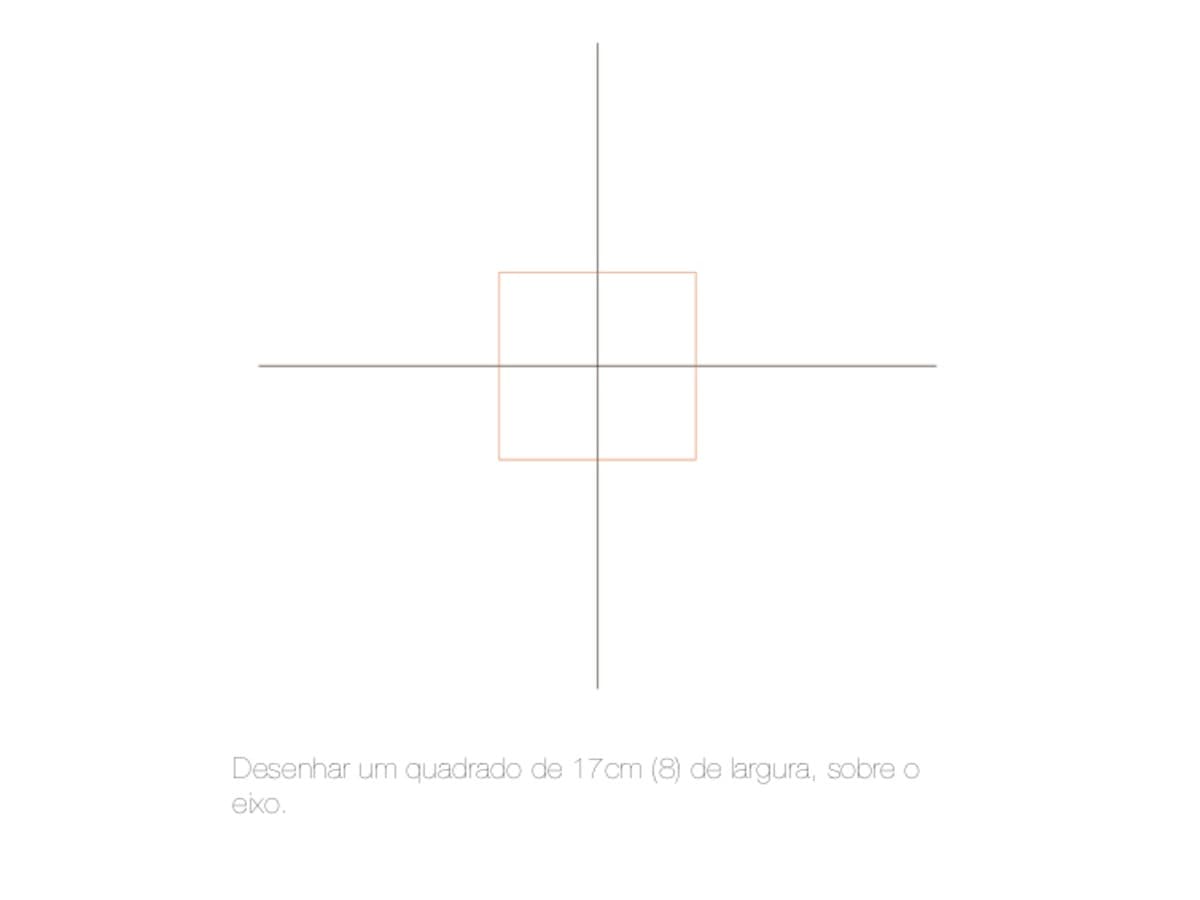
According to Professor Manuel J. Gandra, the number 17 has a deep structural and symbolic role in the history and symbolism of Portugal. This number appears many times over in sacred contexts, especially in connection with the Monument of Mafra, forming part of a magic square of the Sun and evoking the myth of the City of the Sun — Heliopolis. The number 17, or its multiples (such as 34, 51), recurs again and again: in the date of the foundation stone (17 November 1717), in the 17 lamps before the throne in the Basilica, in the 17 lightning conductors, and in the bells of the carillons (51 = 3 × 17).
This recurrence is no mere coincidence: Gandra relates the 17 to the national eschaton, linking it to the founding sacredness of Portugal and to the spiritual principles that sustain it. The number 17 is deeply bound up with the founding myth of the Nation, the Miracle of Ourique, in a symbolic and prophetic dimension. In his work A Cristofania de Ourique: Mito e Profecia, Gandra examines the mystical character of that historical transformation, underlining the role of Ourique as a moment of supernatural consecration of Portugal — an instant of direct contact with the divine that lends the national mission an eschatological and mythic aura. The number 17 appears associated with that founding Logos as a structural and symbolic cipher that weaves the mythic consciousness of Portugal, bound to the prophetic character and the spiritual dimension of its identity — a number that, like the myth of Ourique, transcends chronology and serves as a symbolic beacon for the historical mission of the Nation.
In sum, the number 17 symbolises the mythic and spiritual matrix of Portugal — a sacred number that impresses upon the Nation a symbolic consciousness, a mission and a transcendent identity.
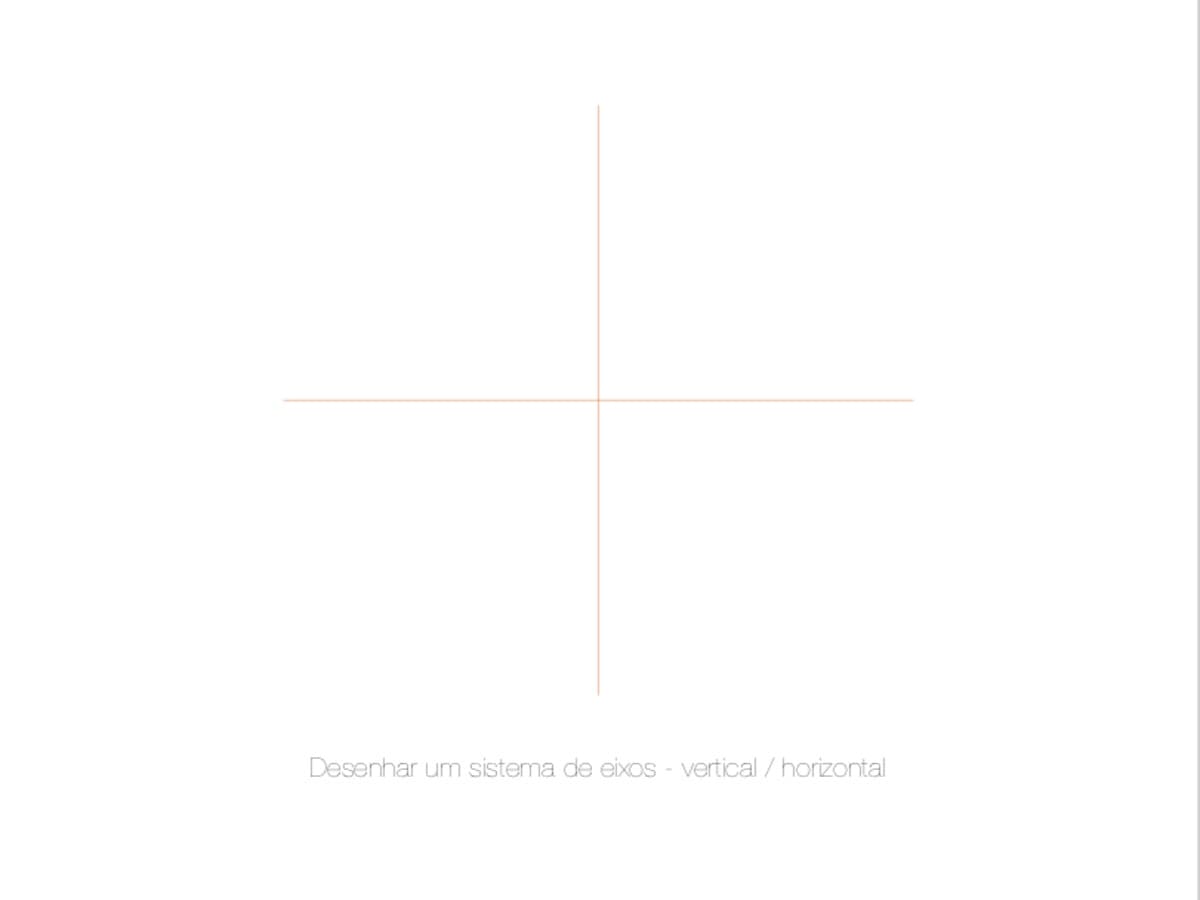
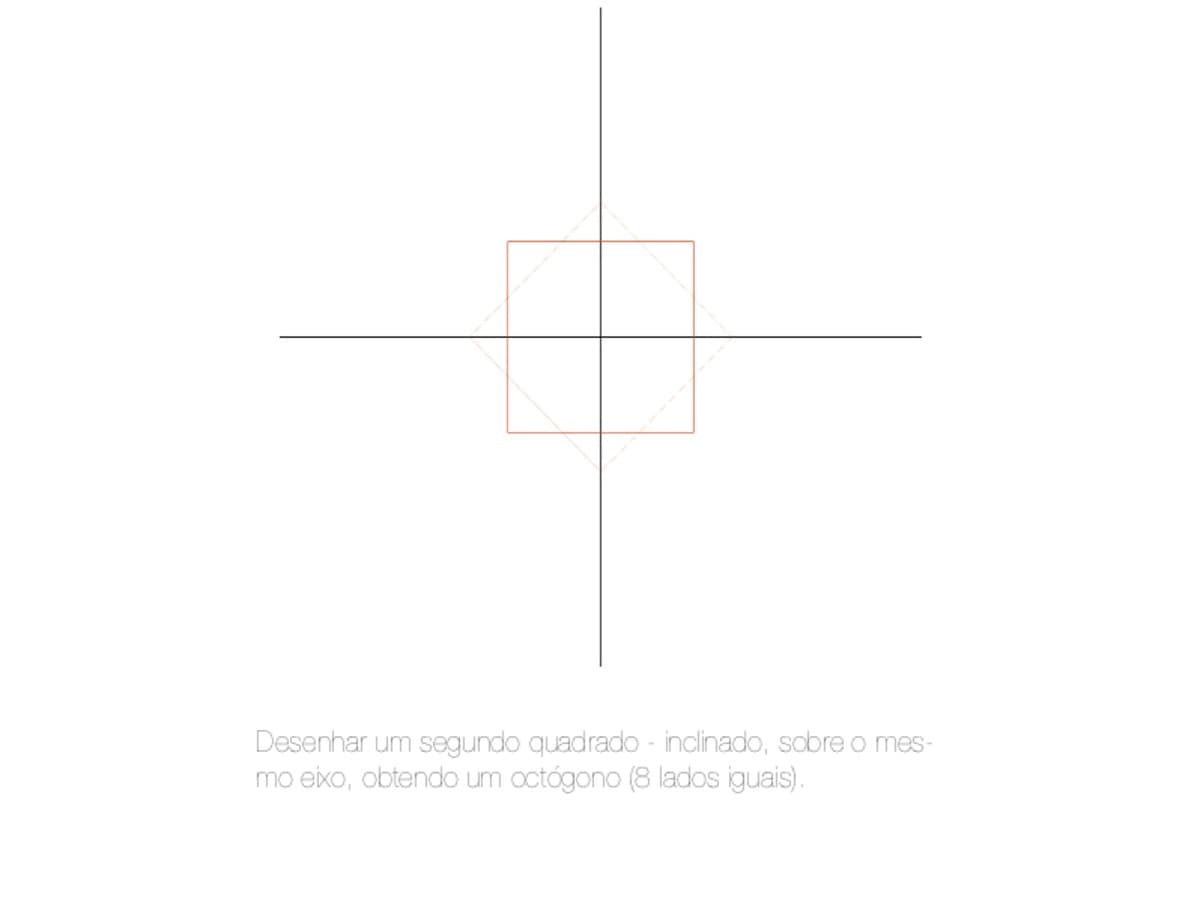
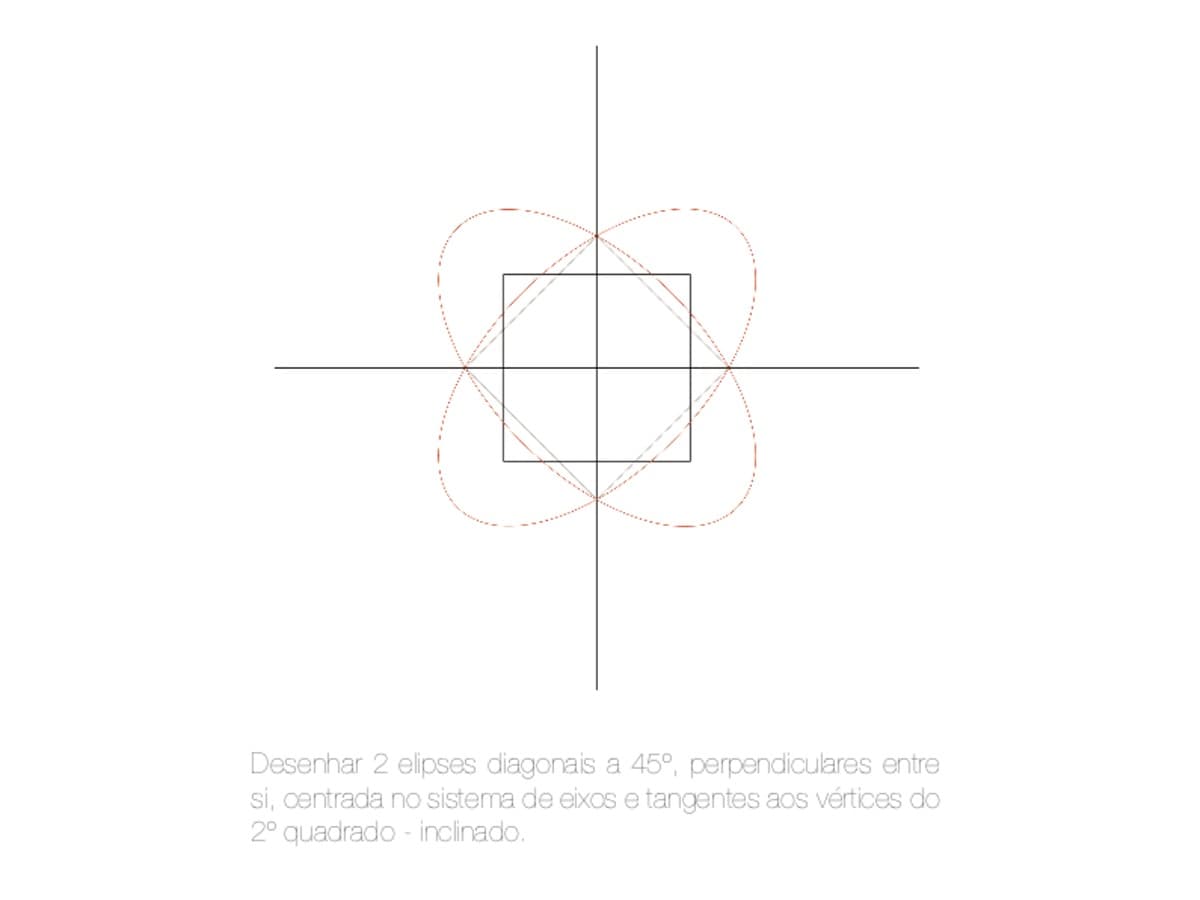
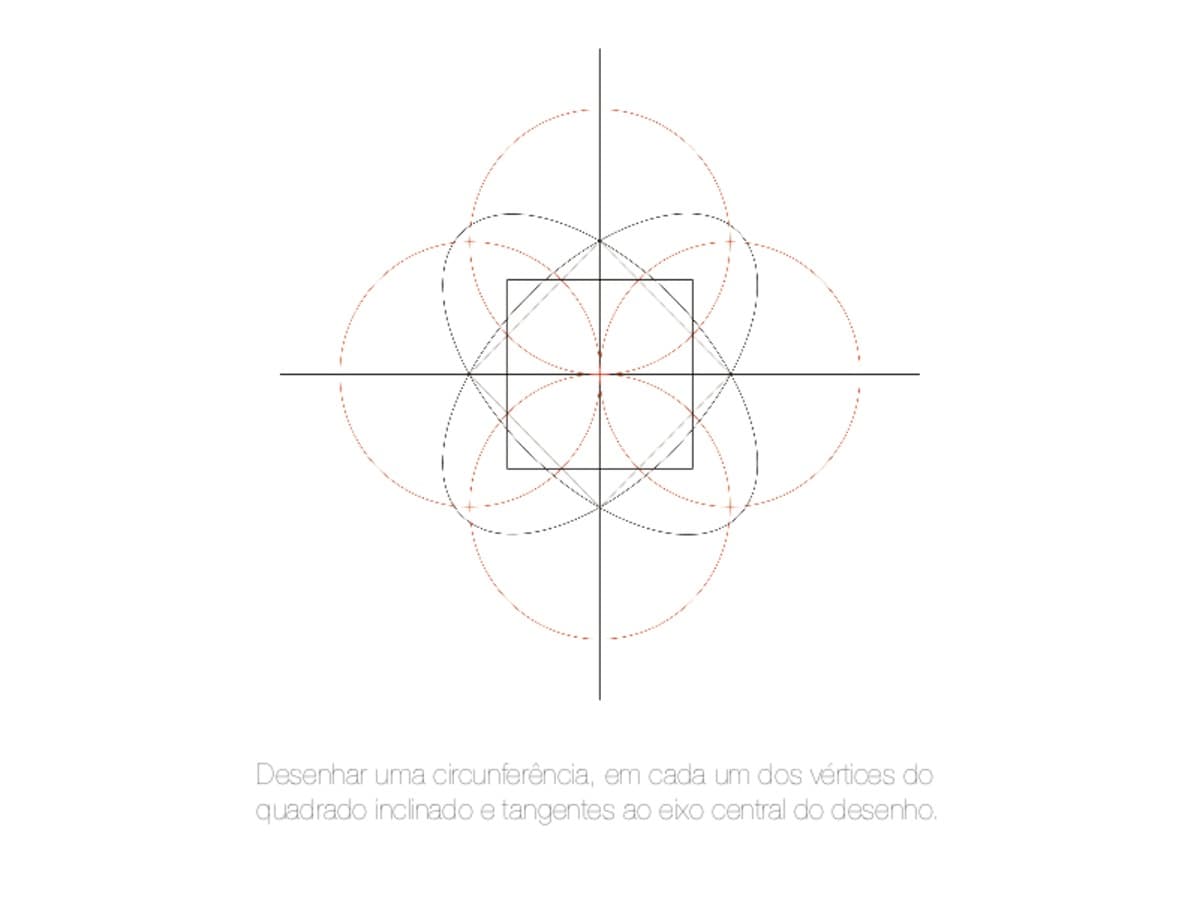
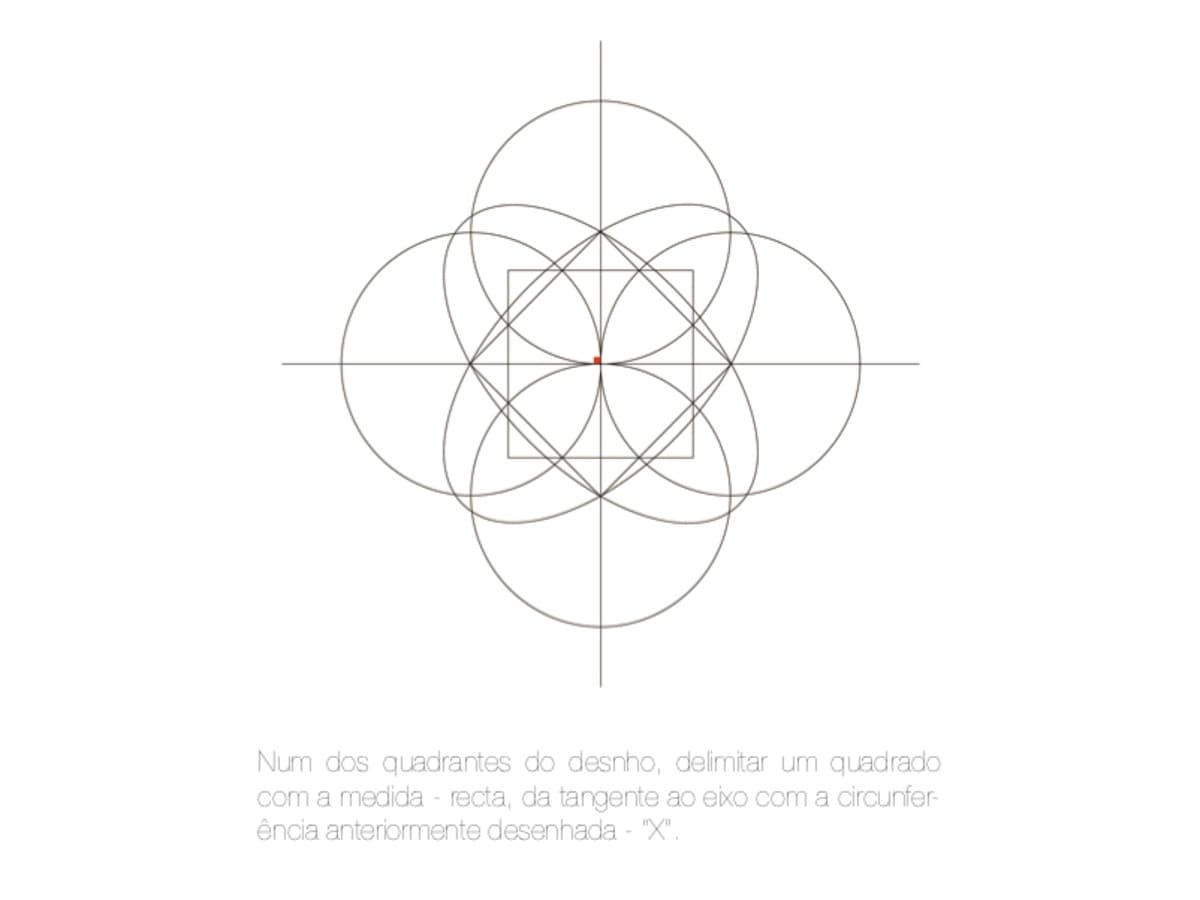
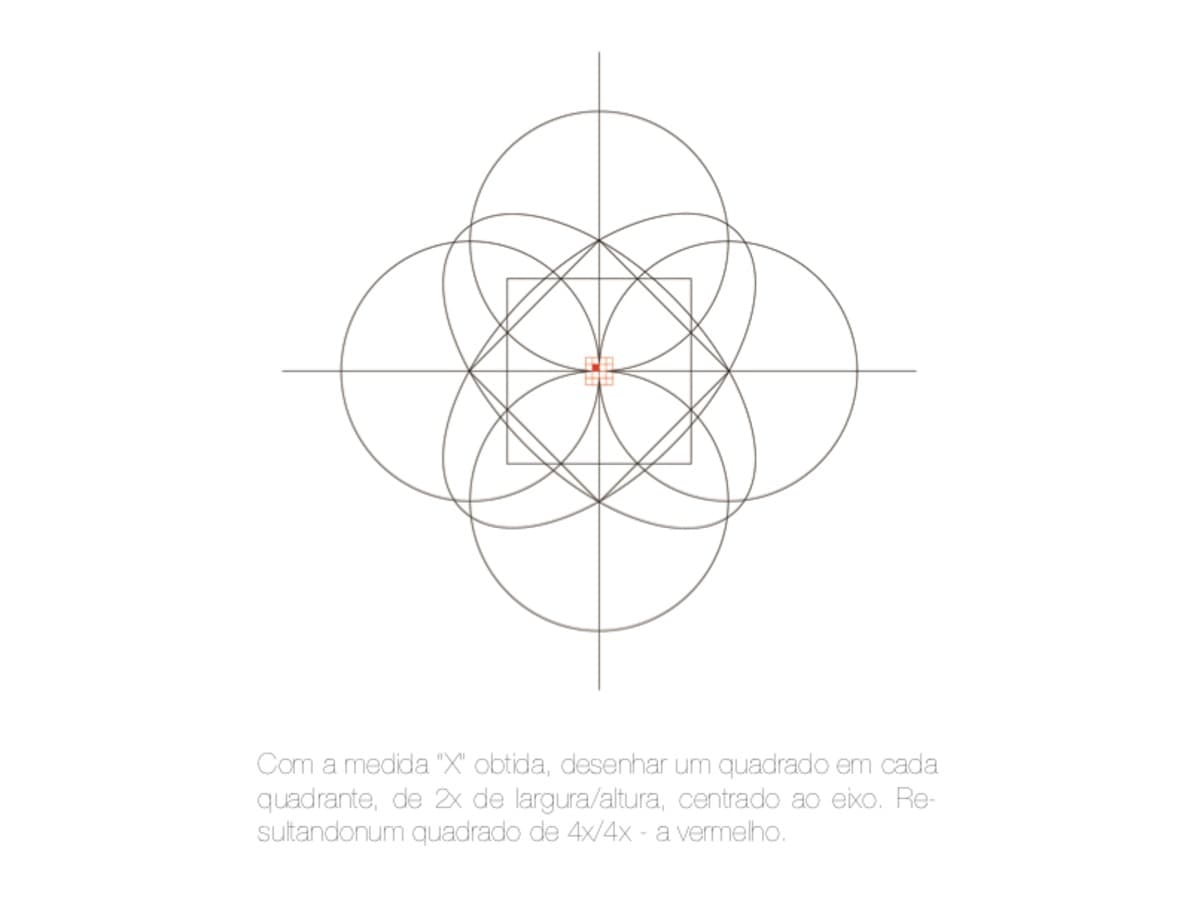
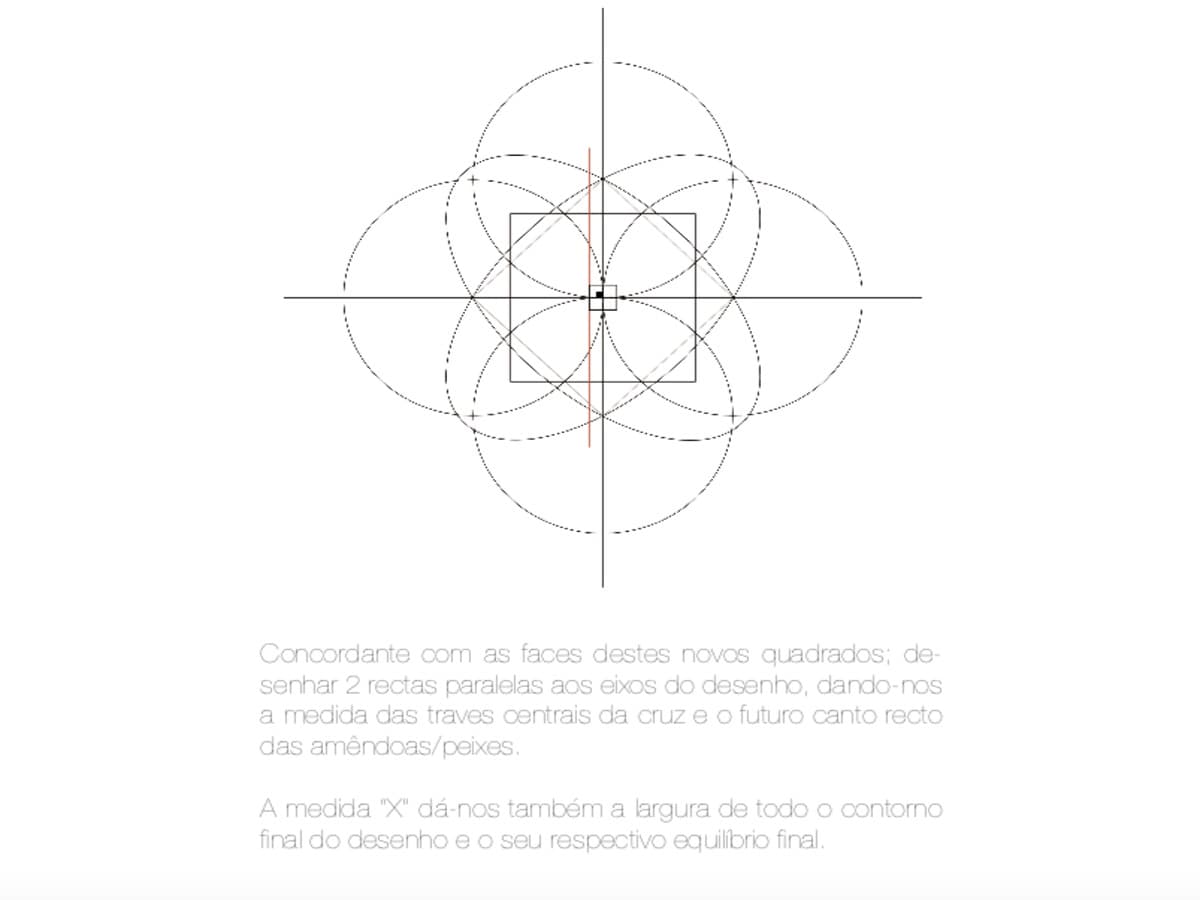
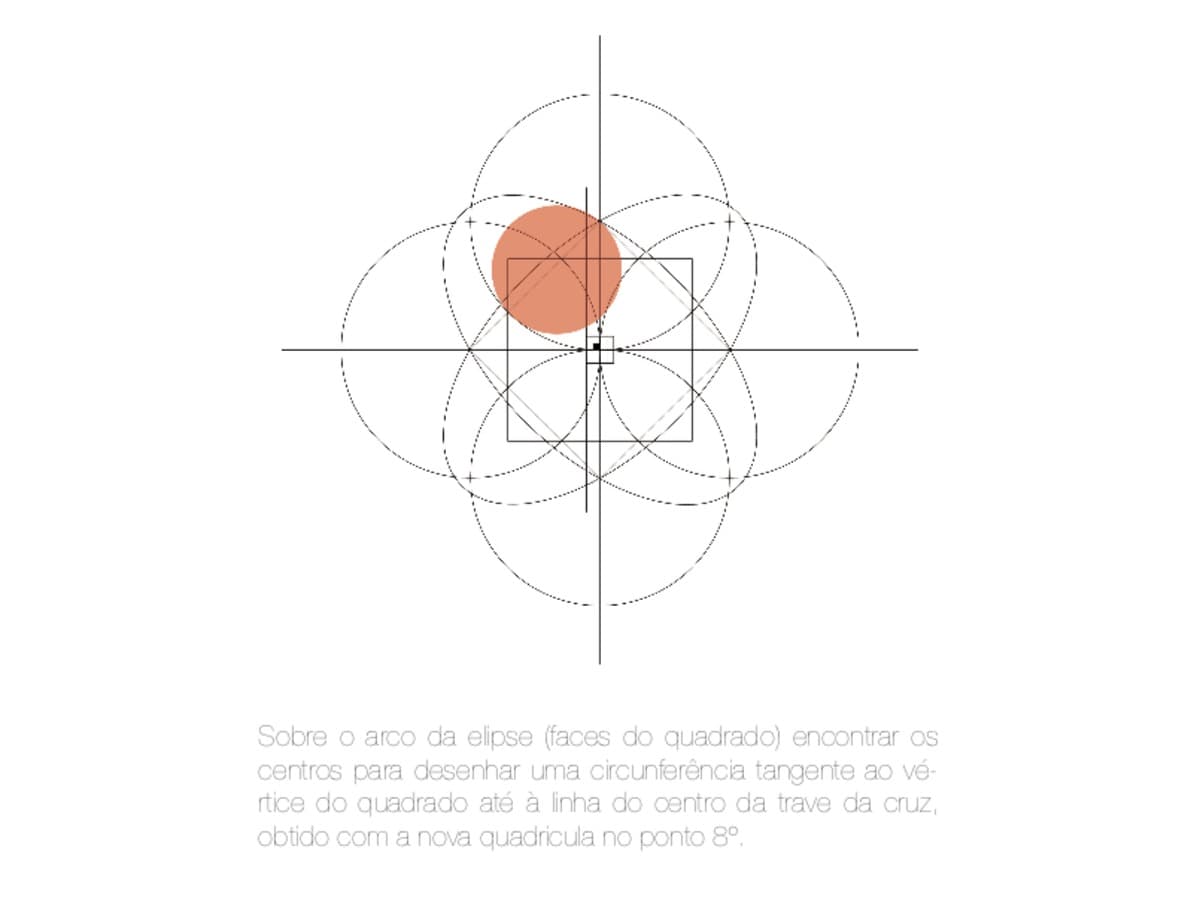
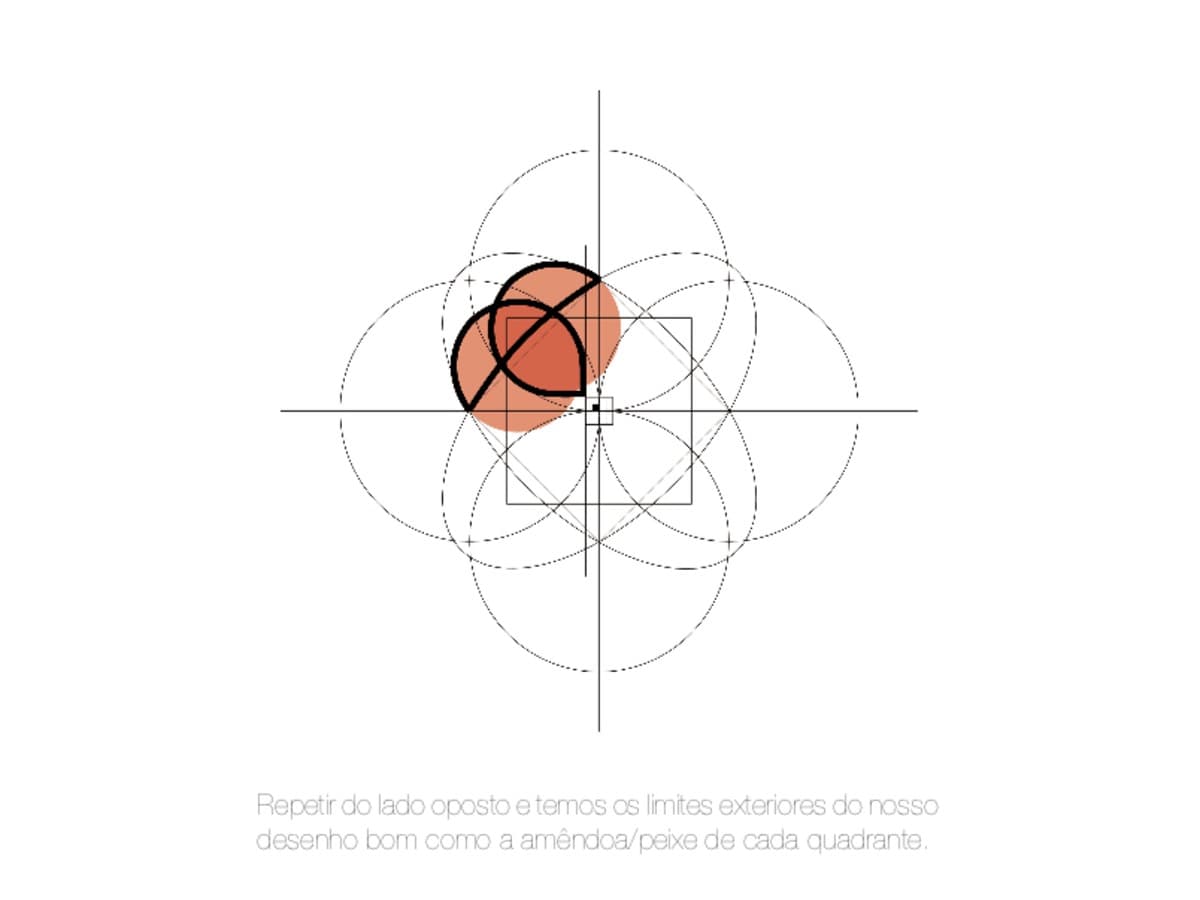
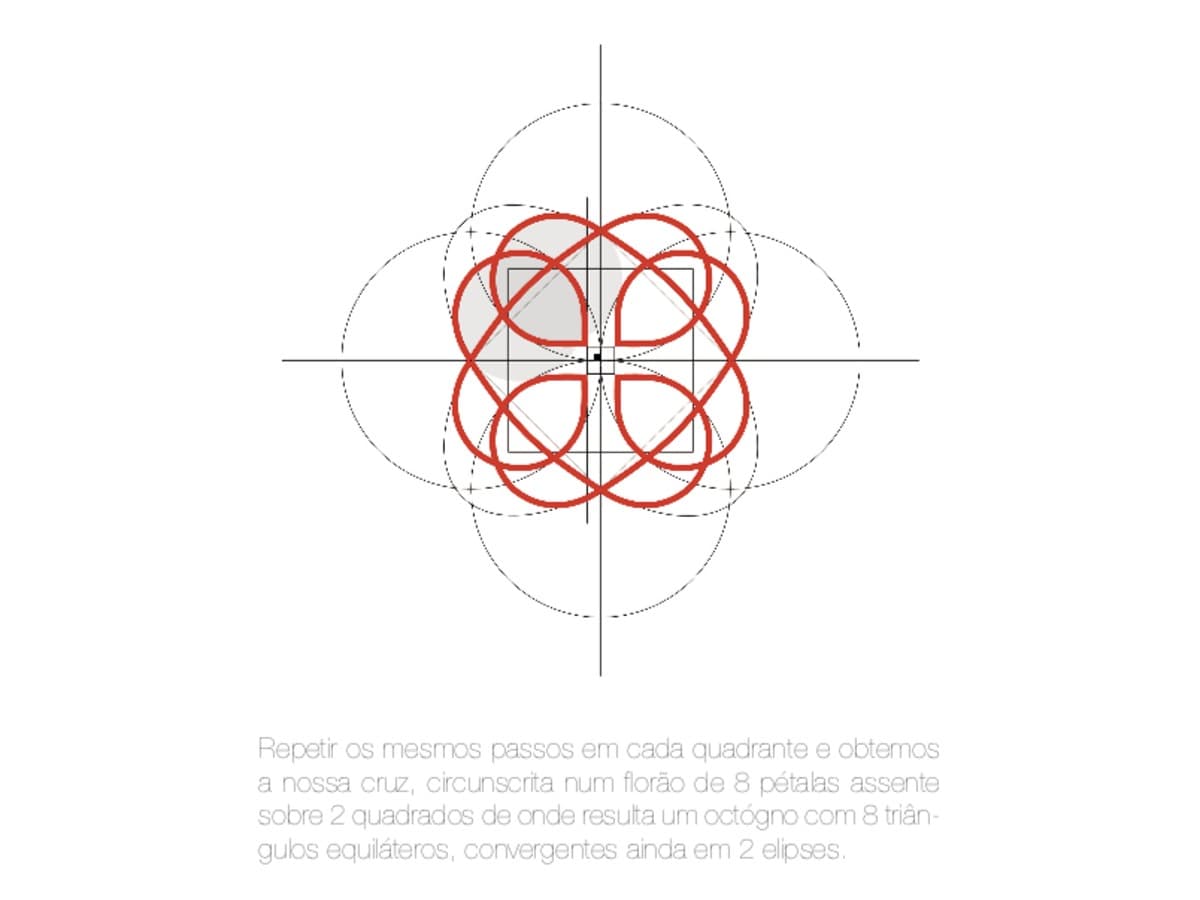
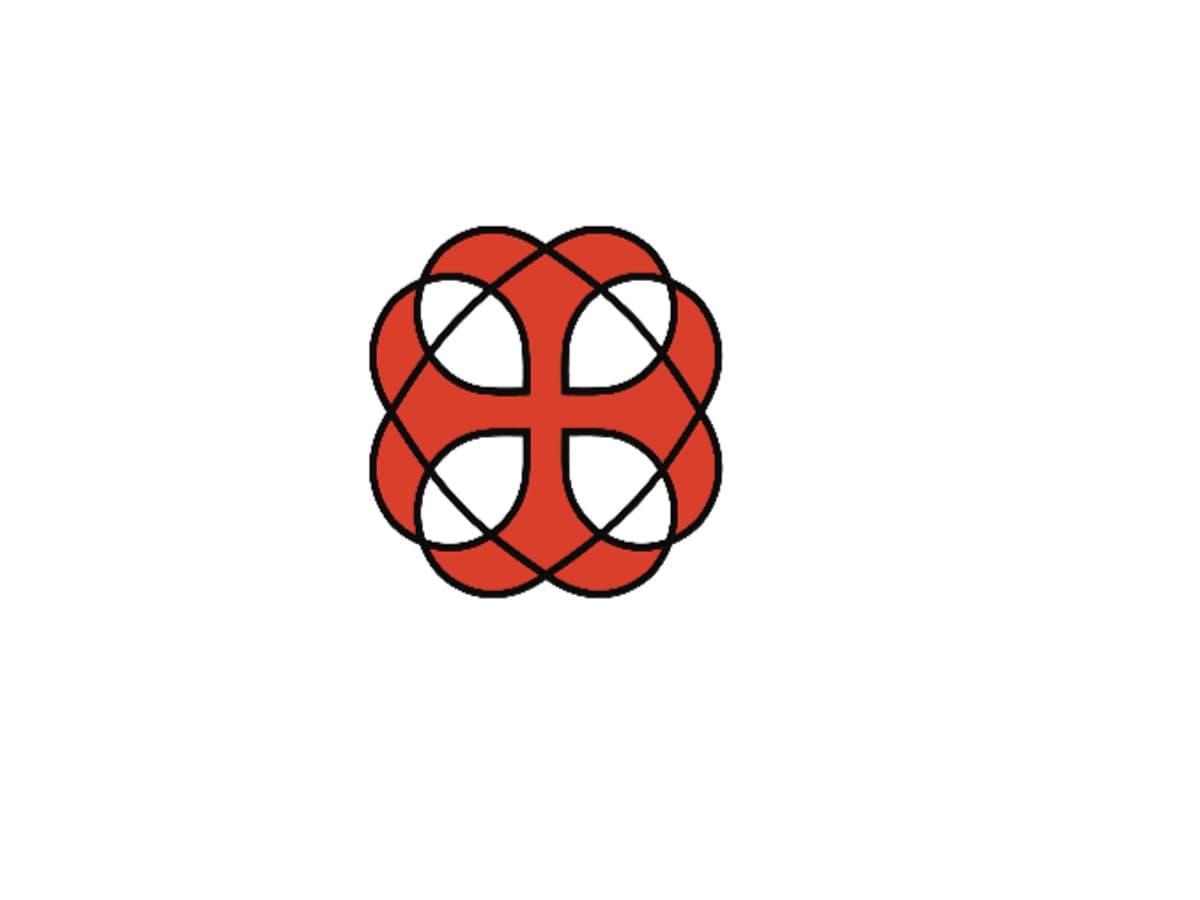
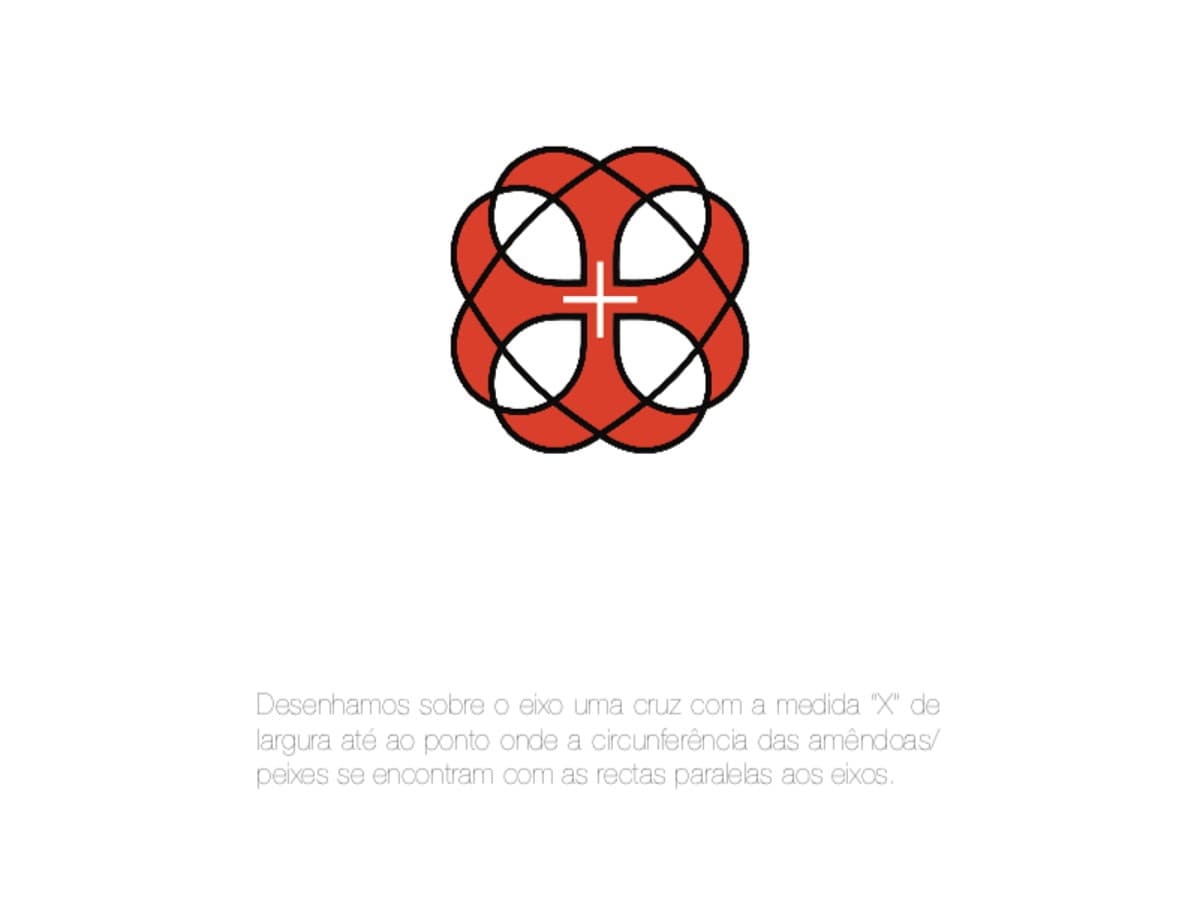
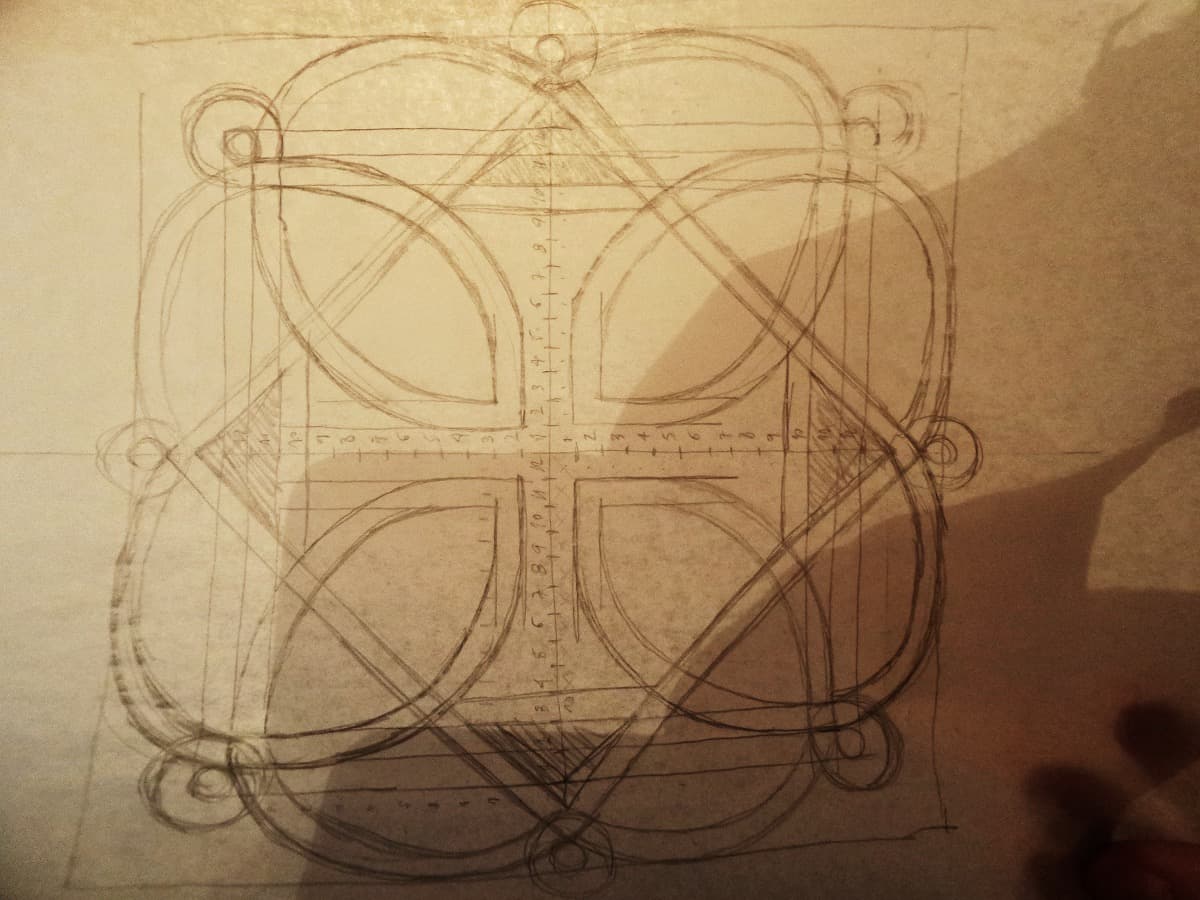
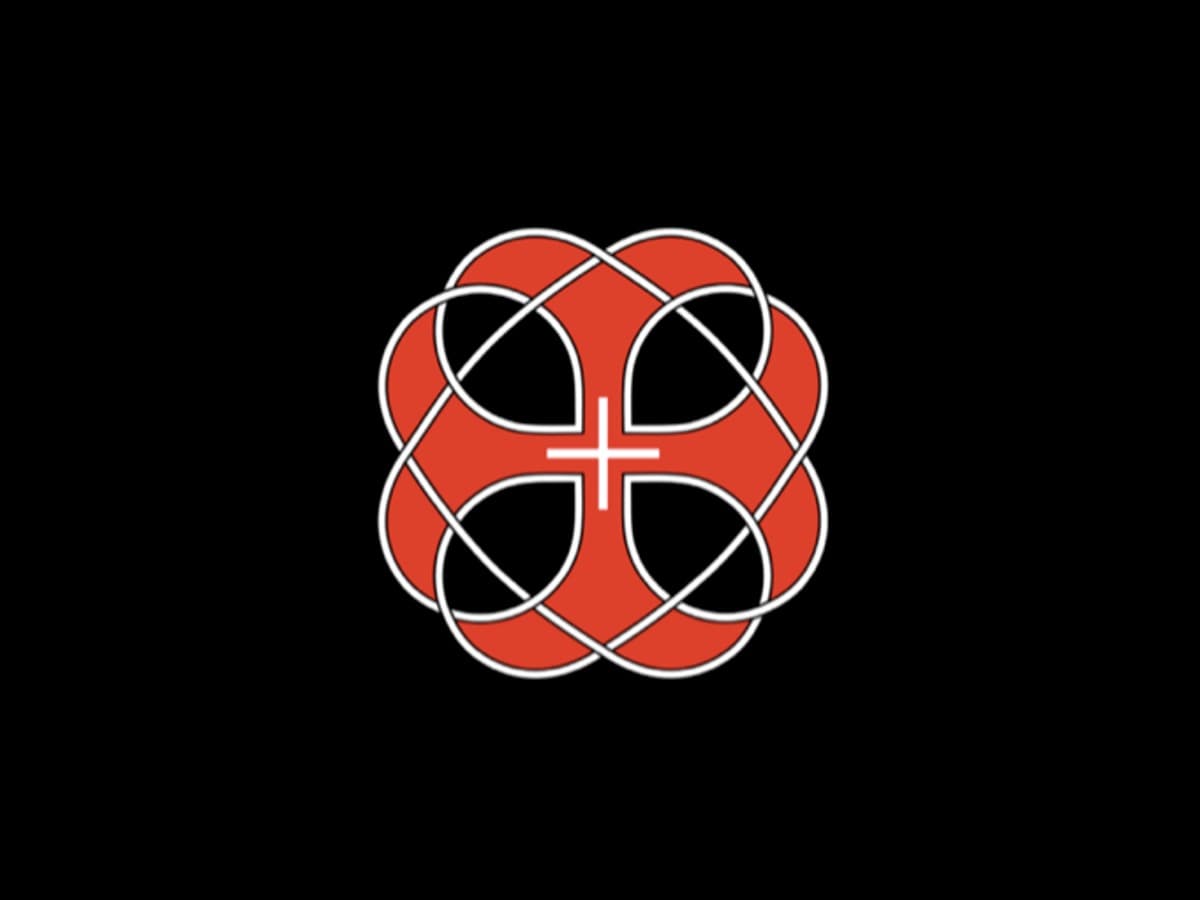
Yes. Every line obeys proportions and numbers of initiatic meaning. We provide a PDF showing, step by step, the symbolic construction of the emblem. Scroll down to see the various stages.
International recognition
Presented all over the world
The Portuguese Rite has been presented in Brazil, Spain, Italy, France, Türkiye, Kazakhstan, Russia, the United States, Malta, Bulgaria, Andorra and Germany.
Sacred Geometry & Numerology
The building of the emblem, step by step
Every line obeys proportions and numbers of initiatic meaning. These sixteen steps show the symbolic construction of the emblem of the Portuguese Rite.